








































SEO as “Findable, Useful, Trustworthy.” SEO—Search Engine Optimization—is about making your brand:
Technical SEO, on-page SEO, and off-page SEO are simply three angles on that same goal.
Where Technical, On-Page, and Off-Page Fit In
Front-end and back-end work sit under these categories, but your focus should be on outcomes: crawlability, relevance, and authority.
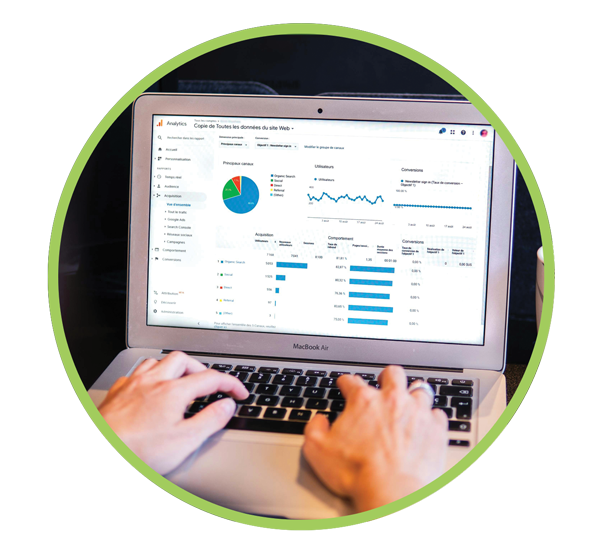
Full Website and Analytics Review.
Every project begins with an SEO audit so we can see:
We review your site, Google Search Console, analytics, paid search data, and any existing reporting you have.
Pinpointing Technical, On-Page, and Off-Page Gaps
From this audit, we spot patterns like:
Front-end and back-end work sit under these categories, but your focus should be on outcomes: crawlability, relevance, and authority.
Building a Prioritized Action Plan Around Your Goals
We don’t treat every issue as equal. Instead, we rank tasks based on:
Quick Wins vs. Long-Term Growth Priorities
You’ll see both in your roadmap:
Site Architecture and URL Structure
A messy structure confuses both users and search engines. We help you:
Crawl Budget and Index Control
Not every URL deserves to be in Google’s index. Technical SEO helps you:
Speed, Core Web Vitals, and Mobile Experience
Search engines and users both expect pages to load quickly and respond well, especially on mobile. We look at:
Then we coordinate with your developers or hosting partners to roll out improvements.
Sitemaps, Robots Rules, and Canonicals
Technical SEO also keeps the “road signs” clean:
Structured Data and Schema Markup
Structured data helps search engines understand your business, pages, and content types. For example:
When Technical SEO Problems Hold Back Great Content
You can write the smartest content in your industry, but if bots can’t crawl it, index it, or load it quickly, it will struggle to rank. Technical SEO clears the path so your content can actually compete.
Keyword and Intent Mapping for Every Page
Instead of stuffing keywords everywhere, we map:
Primary and secondary keywords
Search intent (research, comparison, purchase)
Supporting questions users ask before they convert
Each page gets a clear purpose and role in the larger strategy.
Titles, Meta Descriptions, and Headings That Match Search Intent
We write titles and meta descriptions that:
Match the language your buyers use
Set accurate expectations for what’s on the page
Encourage clicks without clickbait
Headings (H1, H2, H3, H4) structure your content so both people and search engines can follow your story.
Content Layout, Readability, and On-Page Engagement
If your content looks like a wall of text, visitors will bounce. We focus on:
Short, clear paragraphs
Descriptive subheadings
Bullet lists where helpful
Visual aids such as diagrams or examples (when appropriate)
The goal is simple: help users find their answer fast, then show them a clear next step.
Internal Linking and Topic Clusters
Internal links tell search engines which pages matter most on your site. We:
Build clusters around core topics (like “SEO services” or “family law” or “weight loss”)
Point links from supporting content to high-value pages
Avoid spreading your authority too thin across similar URLs
On-Page SEO for Blogs, Service Pages, and Landing Pages
Different page types serve different roles:
Blogs answer broader questions and catch early-stage interest.
Service pages focus on what you do, why it matters, and how to work with you.
Landing pages are tuned for campaigns—organic, PPC, email, or social.
Updating Existing Content vs. Creating New Content
Often, you don’t need “more blogs”; you need better ones. We decide when to:
Refresh old posts with new data, structure, and CTAs
Merge overlapping pages into stronger hubs
Publish new content to fill gaps competitors already target
Technical SEO as the Base Layer
Technical work sets the stage: if crawlers can’t reach, understand, or index your pages, nothing else matters.
On-Page SEO as the Message and Experience
On-page SEO decides whether visitors stick around, learn something useful, and feel ready to move forward.
Off-Page SEO as the Proof You Deserve to Rank
Off-page SEO shows the web is “voting” for you with links, mentions, and reviews.
Common SEO Failure Patterns When One Pillar Is Missing
Great content, poor technical: pages never reach their full ranking potential.
Strong technical, weak content: site is fast but unconvincing.
Good technical and content, no off-page: you stay stuck behind brands with stronger authority.
Our job is to balance all three.
Lower Cost per Lead Over Time
|Paid ads stop the moment you turn off spend. SEO keeps bringing in new visitors as long as your pages stay live and relevant. As your content library grows, the average cost per lead generally trends downward.
Search Visibility and Click-Through Gains
Top-ranking pages:
Grab more space on the search results page
Earn higher click-through rates
Attract visitors who are more likely to convert
Clear titles, meta descriptions, and rich results all contribute to better visibility.
How SEO Supports PPC and Retargeting Campaigns
SEO and PPC help each other:
Keyword research highlights search terms to bid on—and terms better handled with content.
High-intent pages tend to boost Quality Score.
Organic traffic feeds your remarketing audiences, so you can follow up with visitors who didn’t convert on the first visit.
SEO as a Channel That Keeps Working After You Publish
Good SEO behaves like a top salesperson who never sleeps: always present, always ready to answer questions, always pushing visitors toward the right next step.
A contractor in Florida saw their REVENUE TRIPLE IN TWO MONTHS AFTER launching a Google Ads campaign with us.
We helped a med spa CUT AD COSTS BY 40% and increase conversions with smarter targeting and optimized landing pages.
Discovery, Goals, and Strategy Workshop
We start with a working session to understand:
Your business model
Your ideal customers and regions
Your existing marketing mix (SEO, PPC, social, email, offline)
Then we define SEO KPIs tied to your pipeline and revenue, not just ranking screenshots.
Keyword Research and Intent Clusters
|We build topic clusters around:
Core services and products
Supporting content that answers “how,” “why,” and “which is best” questions
Local and branded terms where relevant
Each page gets a clear intent, target terms, and internal link targets.
Technical SEO Fixes and Implementation Support
|After the audit, we:
Prepare a prioritized list of technical fixes
Translate them into developer-ready tickets or implementation plans
Validate changes in staging when possible, then monitor impact after launch
On-Page Content Optimization and New Content Creation
We rewrite or create content that:
Matches search intent
Explains your offer clearly
Uses proof—testimonials, case studies, stats—where available
Gives visitors a simple, obvious next step (book, call, request, buy)
Off-Page SEO, Digital PR, and Local SEO Systems
Depending on your goals, this can include:
Link outreach and partnerships
Industry-specific listings and directories
Local SEO systems for multi-location or service-area businesses
Measurement, Reporting, and Ongoing Iteration
You’ll see:
How keyword groups trend over time
Which pages attract leads and revenue
What’s working, what’s stuck, and what’s next
Collaboration With Your Dev, Marketing, and Sales Teams
We’re used to working inside existing teams. We can:
Write tickets your dev team can implement
Provide briefs your writers can follow
Join recurring check-ins with marketing and sales to stay aligned
SEO Tied Directly to Pipelines and Booked Revenue
Every task links back to a business outcome: more demos, more booked calls, more checkouts, more qualified form fills.
PPC and SEO Under One Strategy
Because we also manage paid media, we can:
Avoid bidding against terms you already rank well for
Spot organic gaps faster
Share search query data both ways
Clear Scope, Roadmaps, and Timelines
You’ll always know:
What we’re working on this month
What’s coming next month
What success should look like by quarter
Ticket-Ready Recommendations for Your Developers
Instead of vague advice, we provide:
Step-by-step tickets for technical changes
Screenshots and examples where helpful
QA checks after deployment
Tool Stack, Data Accuracy, and Risk-Aware Site Changes
We work with leading SEO and analytics tools and cross-check data before recommending big moves—especially before rebuilds, domain changes, or major template shifts.
SEO doesn’t have to feel like a black box. When you break it into technical SEO, on-page SEO, and off-page SEO—and back it with a real audit, a clear roadmap, and honest reporting—it turns into a predictable growth channel.
At The Seedless Agency, we start with where you are, tie every task to what you want to achieve, and build a plan that respects your resources and internal team. The result: a site that is easy for search engines to crawl, easy for humans to understand, and strong enough to compete in your space.
If you’re ready to stop guessing and start seeing SEO work alongside your PPC, social, and other channels, it’s time to talk.
» FREE SEO AUDIT (limited spots)
Get a focused review of your current technical, on-page, and off-page situation plus a ranked list of high-impact fixes.
» BOOK A STRATEGY CALL
Want to talk through goals, tech stack, and timelines?
» REQUEST A CUSTOM PROPOSAL
Need a scope shaped around your site, team, and budget?
Many sites see early movement within 6–12 weeks once technical fixes and key content updates go live. Larger jumps often appear in the 3–6 month range, with steady growth beyond that as your content and authority build up. Timelines vary based on competition, domain history, and how quickly changes are implemented.
Yes. PPC gets you instant visibility while SEO builds a sustainable organic channel. When both work together, you can cover more search terms, test messaging faster, and reduce blended acquisition costs over time. PPC data often feeds SEO strategy—and strong SEO can allow you to dial back paid spend on some terms later.
It can, if SEO isn’t considered. Major changes to URLs, templates, or content without redirects or planning can cause drops. When we support a rebuild, we create redirect maps, review internal links, protect top-performing content, and monitor performance after launch to keep your pipeline stable.
Our audits typically cover:
You also get a prioritized action plan, not just a long list of problems.
Absolutely. We often function as an SEO partner that supplies strategy, tickets, briefs, and QA, while your teams implement. We stay plugged in through shared channels, recurring meetings, and clear documentation so everyone knows what to do and why it matters.
Are you here to browse, or do you just want to skip to the part where we help grow your business?
Fill out the form and we’ll get back to you faster than your last agency replied to an email.